Industrial pipe manufacturing
Industrial pipelines are essential systems that keep modern industries running. They transport liquids, gases, and raw materials safely and efficiently, helping companies improve productivity and maintain safe operations. From manufacturing plants to energy facilities, pipelines are a key part of industrial infrastructure.
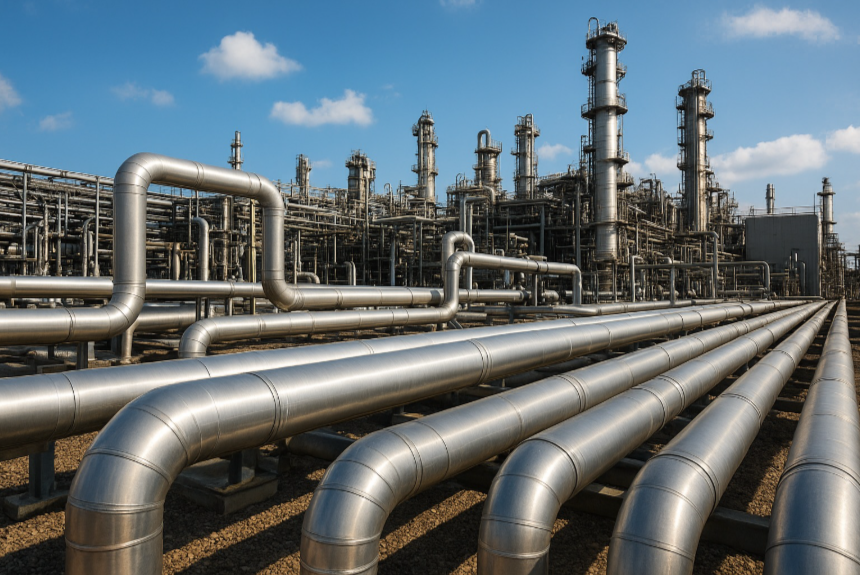
Industrial pipelines are specially designed systems used to move fluids under high pressure and demanding conditions. They are built with strong and durable materials such as stainless steel, carbon steel, and advanced alloys to ensure long service life and reliable performance.
These systems are engineered to meet strict industrial safety and quality standards.
Industrial pipelines help optimize production processes and reduce operational risks. By creating a controlled and continuous flow, they minimize human error and improve workplace safety.
Key advantages include:
• Increased efficiency
• Lower operating costs
• Reliable material transport
• Enhanced safety standards
Oil and Gas
Used to transport fuels and energy resources over long and short distances.
Chemical and Petrochemical
Essential for handling hazardous and corrosive substances safely.
Food and Beverage
Sanitary pipelines help maintain hygiene and product quality.Water TreatmentVital for distributing clean water and managing wastewater systems.
With the integration of smart technology, sensors, and automated monitoring systems, industrial pipelines continue to evolve. These innovations allow companies to detect problems early, reduce downtime, and operate more sustainably.
Industrial pipelines are the hidden strength behind modern industry. As technology advances, these systems continue to evolve, becoming safer, more efficient, and more sustainable. For any industrial operation, investing in reliable pipeline solutions is not just an option, it is a necessity.